When your key won’t turn in ignition, stop before you force it. Check that the shifter is fully in Park, relieve pressure on a locked steering wheel, and look at the key for damage. If it still binds, the trouble may be the key, the lock cylinder, or another ignition-related part. Extra force can break the key or damage the ignition.
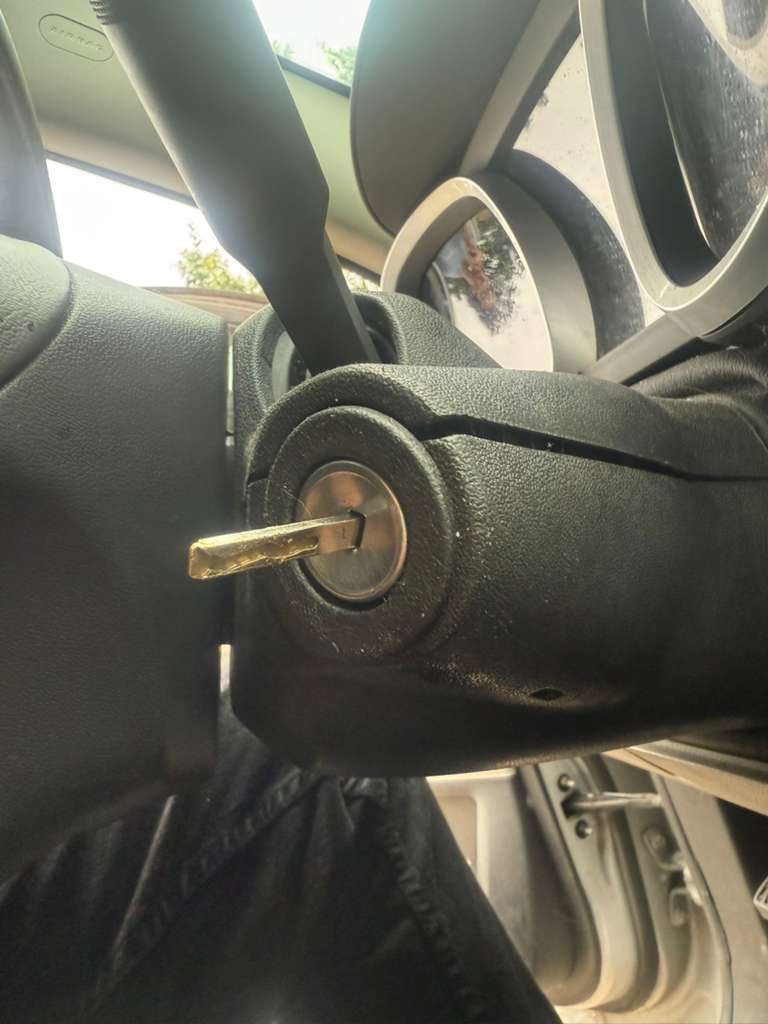
Start with the conditions that can block the key
A key that goes into the ignition but will not rotate does not always mean the ignition has failed. A few car settings can keep it from turning normally. Make these checks with the vehicle parked and your foot on the brake.
Make sure the shifter is fully in Park
On an automatic vehicle, press the brake and confirm the shifter is firmly in Park. If it already appears to be there, keep the brake pressed and move the shifter through its normal range only if it is safe to do so. Then return it fully to Park and try the key with gentle pressure.
Federal vehicle safety guidance describes systems designed to prevent the starter from operating when an automatic transmission is in a forward or reverse drive position. A shifter or interlock issue may be part of what you are feeling, so don’t try to defeat a car safety system. The NHTSA guidance on key-locking and starter systems gives background on these protections.
Take pressure off a locked steering wheel
The steering wheel can lock after the vehicle is turned off, especially if the front tires were left against a curb or turned hard while parked. The wheel may feel stuck, and the key may refuse to turn.
Hold the brake. Grip the steering wheel and gently move it in the direction where it has a little movement. While holding that light pressure, try turning the key normally. Do not jerk the wheel or twist the key hard. NAPA notes that a locked steering wheel can stop the key from turning.
Check whether the battery or dashboard is part of the problem
A mechanical key that physically will not rotate points to a different problem than a key that turns but the car will not start. If the key turns and the dash stays dark, or the car does nothing after the key turns, stop treating it as a stuck-key problem. That situation may involve the battery, electrical system, starter, or another vehicle part.
This difference matters when you call for help. Say whether the key will not move at all, turns only partway, turns but will not release, or turns normally without starting the car.
Look at the key before trying again
Keys wear down through daily use. A bent key, a cracked plastic head, worn cuts, or damage near the metal blade can keep it from matching the ignition cylinder correctly. The NAPA Know How review of stuck ignition keys lists a bent key and cylinder wear or obstruction among possible causes.
- Look for a bent blade, deep scratches, cracks, or worn edges.
- Remove bulky keychains that make the key hard to hold straight.
- If you have a spare key, compare its condition with the key that is stuck.
- Try the spare only with gentle pressure. Do not use a damaged key again if it catches.
A spare key that turns can point toward wear in the daily-use key. It does not prove what repair is needed. A spare that also will not turn makes the ignition cylinder, steering lock, shifter position, or another car issue more likely.
Know when to stop trying
Stop immediately if the key feels like it may bend, starts to twist, moves only with force, or is already cracked. A key can snap inside the ignition. That turns a stranded-car problem into a removal problem too.
Don’t hit the key, pry around the ignition, put tools into the key slot, or take apart steering-column panels. Avoid sprays or household lubricants unless the vehicle maker directs their use. They can leave residue, hide the real problem, or create a larger repair issue.
AutoZone also identifies worn keys, debris, damaged cylinders, and programming concerns as possible causes. The exact cause depends on the vehicle and key type. A traditional metal key, a key with a chip, and a push-button vehicle can fail in different ways.
What the key’s behavior may tell you
The way the key acts gives a technician useful clues. It cannot confirm a diagnosis on its own, but it can help you describe the problem clearly.
| What you notice | What to report when you call |
|---|---|
| The key will not move and the steering wheel feels locked | Say whether the wheel has a small amount of movement in either direction. |
| The key enters but catches or will not turn | Say if the key looks bent or worn and whether a spare behaves differently. |
| The key turns partway and stops | Say where it stops and whether the shifter is fully in Park. |
| The key turns but the car does not start | Say whether dashboard lights come on and whether the engine makes any sound. |
| The key is stuck in the ignition | Say if the shifter is in Park and whether the key is in the off position. |
Choose mobile help when the ignition still binds
If the simple checks do not free the key, a mobile automotive locksmith can inspect the key and ignition where the car is parked. That can be useful when you are in a work parking lot, outside a store, or at an apartment lot in Houston and the vehicle cannot be moved.
Before service begins, be ready to show identification and proof that you are allowed to access the vehicle. Have the make, model, year, and key type ready if you know them. Tell the technician whether you have a spare key, if the key broke, and what you tried. Those details help them prepare for the right kind of issue without guessing.
For a stuck ignition, a damaged key, or a broken key, Ignition repair and replacement from ASAP Locksmith is available as a mobile Houston service. The needed work may range from a key-related fix to ignition repair or replacement, depending on inspection and the vehicle.
FAQs
Can a dead car battery keep a key from turning?
A dead battery may keep the vehicle from starting or affect electronic features, but it does not usually explain a metal key that physically cannot rotate in a mechanical ignition. Describe both symptoms if the dash is dark and the key is stuck. The vehicle needs a proper check rather than an assumption about the battery.
Can I use my spare key if the main key will not turn?
You can try an undamaged spare gently. If it turns, set aside the worn or bent key instead of continuing to use it. If neither key turns, stop trying to force either key. A shared problem points away from a single worn key and needs inspection.
Why is my key stuck after I turned the car off?
On many automatic vehicles, the key may stay locked until the shifter is fully in Park and the ignition is in the correct off position. If those are correct and the key remains trapped, do not pull hard. A shifter interlock, ignition cylinder, or key issue may need attention.
Need help with a key or ignition that will not cooperate in Houston? Call ASAP Locksmith at (832) 404-0102 for mobile automotive locksmith service and explain what the key, steering wheel, shifter, and dashboard are doing.