Yes, you can sometimes pull a broken key out yourself, if the break is clean and you can still see a bit of the key. The safe moves are gentle and slow, with simple tools like tweezers or a thin pick. The not safe moves are force, glue, drilling, and “let me just shove this other key in there.” If the key is flush, the lock is tight, or the key broke in an ignition, it is smarter to stop early.

First, take a breath and stop turning the lock
A broken key feels like a tiny disaster. It is not. Most locks can be saved if you do not bully them.
Here is what usually makes things worse:
- Twisting the key fragment with pliers
- Jamming another key in to “push it out”
- Spraying random stuff and hoping it melts the problem
- Smacking the lock like it owes you money
A lock is more like a watch than a brick. Inside are small parts that like calm hands.
How locks get hurt, in plain English
Many door locks use pins. Some older or certain commercial locks use wafers. Either way, the idea is the same.
When you shove tools in and twist hard, you can:
- Bend wafers so the lock never feels smooth again
- Scratch pins so the key drags and sticks
- Crack the plug or cylinder housing if you pry at the face
- Break off your tool, which turns one stuck piece into two
Think of the cylinder like a soda can. It looks tough, but if you crush it the wrong way, it stays crushed.
Before you try anything, do these quick checks
1) Door lock or car ignition?
A house door lock gives you more room to work. A car ignition is tighter and easier to damage. If it is a key stuck in an ignition, scroll down to that section. If you need hands-on help, use the Emergency locksmith page or the Car locksmith page to reach ASAP Locksmith.
2) Is any of the key sticking out?
If you can grab even 1 to 2 millimeters, you have a real shot.
3) Did the key break while turning?
If it snapped under torque, the lock may be bound up. That makes removal harder.
4) Is the lock wet, gritty, or rusty?
Houston humidity and rain can bring grit, and grit turns locks into sandpaper. If the lock feels crunchy, go extra gentle.
Tools that are safe to try at home
You do not need a gadget store. You need control.
Good options:
- Fine tip tweezers
- Needle nose pliers, only if enough key is sticking out
- A broken key extractor tool, thin hooked metal
- A small paper clip, straightened with a tiny hook, only if you can stay light
- A flashlight, phone light works
- Graphite lock lubricant or a dry lock lube, not grease
Skip these:
- Super glue
- WD-40 as a first choice for a keyway, it can attract dirt over time
- Power drills
- Screws, nails, or anything you “kind of” sharpened
- Kitchen knives, they slip and you bleed
Safe DIY steps to remove a broken key from a lock
Step 1, get the lock back to neutral
If the key broke while turning, the lock may be stuck in a turned position. Try to return the plug to the normal vertical key position.
Do it like this:
- Use a small flathead screwdriver very gently at the keyway edge, not forced
- If you feel hard resistance, stop
- If the door is pushing on the latch, pull or push the door to take pressure off
A little door pressure can bind the lock. This happens a lot on older doors in apartments and storefronts. If you want service for apartment doors, see Locksmith for apartments.
Step 2, add light lube only if it is dry or gritty
Use a dry lock lube. A tiny puff is enough. Too much makes sludge later. For general product background, see https://en.wikipedia.org/wiki/Lock_lubricant.
If the lock is wet from rain, wait a bit. Water plus dust makes paste.
Step 3, try tweezers first if you can see the key
Tweezers work when the key is proud of the face.
- Grip the key shard straight on
- Pull straight out
- Wiggle in tiny motions, not big yanks
Picture pulling a splinter. Slow wins.
Step 4, use a thin hook tool if the key is flush
If the broken piece is flush with the face, tweezers cannot bite.
Try this:
- Insert the hook along the top edge of the keyway
- Feel for the grooves of the key blade
- Catch the key and pull out slowly
Do not rake around like you are stirring gumbo. You can scratch parts inside. If you want professional help with extraction, see Car key extraction.
Step 5, try the “two thin blades” trick, gently
If you have two very thin pieces of metal, like two small paper clips shaped flat, you can try to pinch the key from both sides.
- Slide one on each side of the key fragment
- Pinch in and pull out
If the lock is tight and you must force it, stop. Force is the problem, not the answer.
What not to do, even if your buddy swears it worked once
Do not use super glue
People think, “I will glue a toothpick to it.” The glue can drip into the keyway and bond pins or wafers. Then you do not just have a broken key, you have a glued up lock.
Do not push it farther in
Using another key, a bobby pin, or a screwdriver to push it can lodge the fragment behind internal parts. Then extraction gets harder.
Do not drill the lock
Drilling is a last resort and often means replacing parts. Also, it is easy to slip and damage the door or trim.
Do not pry on the face of the cylinder
That can crack the cylinder collar or bend the plug. A cracked cylinder can turn into a full lockout later.
Quick troubleshooting steps that keep you out of trouble
- If the key tip is sticking out, then use tweezers and pull straight out.
- If the key is flush but you can see it, then use a thin hook tool along the key grooves.
- If the lock feels bound, then take door pressure off by pulling or pushing the door and try again.
- If the lock is gritty or dry, then use a small amount of dry lock lube and retry once.
- If the key broke in an ignition, then stop early and avoid forcing the steering wheel or key cylinder.
- If your tool bends, slips, or you feel hard resistance, then stop and call a locksmith before parts get damaged.
Keys break for a few common reasons
Most broken keys are not “bad luck.” They are wear and stress.
Common causes:
- Worn key cuts, the key gets thin over time
- Copy of a copy, each copy gets a little worse
- Heavy keychain weight, it twists the key
- Dirty lock, grit raises friction
- Misaligned door, latch pressure binds the plug
- Temperature swings, metal expands and contracts
Houston heat can soften plastics and expand metal parts a bit. Humidity can speed up corrosion, especially on older locks near exterior doors.
A few Houston notes you may recognize
If you live near Westheimer or drive around I-10 a lot, your keys see plenty of vibration and pocket grit. That grit shows up inside locks. Also, many Houston homes have exterior doors that swell a bit with humidity, then the latch rubs and adds stress when you turn the key.
What we usually see in Houston, TX:
- Key blades worn smooth from daily use, then they snap under a hard turn
- Locks full of fine dust after storms, then the key sticks and breaks
- Apartment deadbolts that bind when the door sags a little, then the key twists
Broken key stuck in an ignition, what is safe and what is not
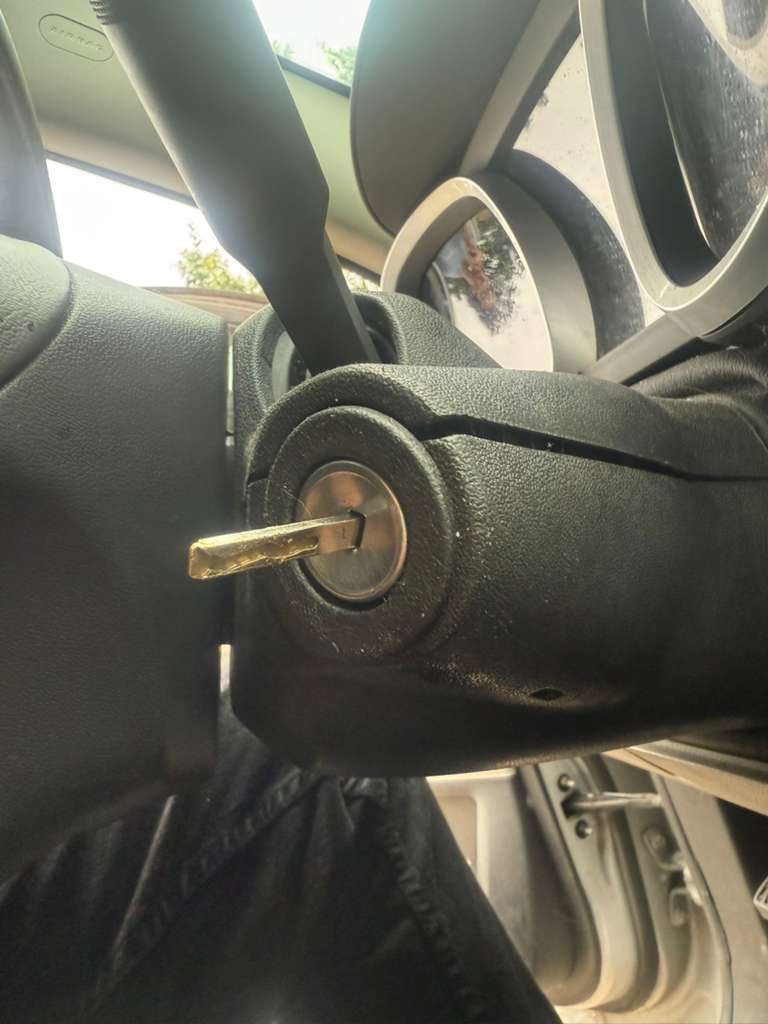
Ignitions are touchy. The safe goal is to avoid damage to the ignition cylinder and avoid setting off extra problems. If you need ignition-related help, see Ignition repair and replacement.
Safe things to try:
- Put the car in park and set the brake
- Center the steering wheel, then lightly wiggle the wheel left and right to release pressure
- Use a flashlight to see if the key fragment sits near the front
- If a small piece is sticking out, use fine tweezers and pull straight out
Things to skip:
- Forcing the steering wheel hard while tugging on the fragment
- Shoving tools deep, you can damage internal wafers
- Using glue
- Spraying thick oils that can trap dirt
If the key broke while the wheel was locked, you may feel extra bind. Gentle steering wiggle can help, but if the fragment is deep, this is a stop sign. For reference on steering wheel lock behavior, see https://en.wikipedia.org/wiki/Steering_lock.
Myths and facts people pass around
Myth: “WD-40 fixes stuck locks.”
Fact: It can free things short term, but it can also leave residue that holds dirt.
Myth: “Just tap the lock and it will fall out.”
Fact: The fragment is usually held by friction and internal parts, tapping rarely helps.
Myth: “Glue a stick to it and pull.”
Fact: Glue can spread inside the cylinder and create a bigger problem.
Myth: “If you pull hard enough, it will come.”
Fact: Hard pulls can bend parts and turn a small fix into a lock replacement.
When you should stop and call a locksmith
Stop early if you hit any of these:
- The key broke off flush and you cannot catch it in two tries
- The lock is on a high value door, like a front door deadbolt
- The cylinder feels rough, crunchy, or jammed
- Your tool slipped and you think you scratched something inside
- It is a car ignition or a high security keyway
- You have to be somewhere soon and time matters
A good rule is two gentle attempts. After that, you are often paying for extra damage, not just removal. If you want to schedule service with ASAP Locksmith, use Contact Us.
Simple care schedule to help prevent broken keys
Weekly
- Do a quick feel test. If the key starts to drag, notice it early.
- Keep your keychain light. If it looks like a janitor ring, it is time to slim it down.
Monthly
- Wipe your key blade with a dry cloth to remove pocket lint and grit.
- Check door alignment. If you must lift the handle to lock, the door may be sagging.
Yearly
- Use a dry lock lube on exterior locks, especially ones exposed to rain or humidity.
- Replace worn keys. If the grooves look rounded, get a fresh cut from a good original.
FAQs
Can I use a paper clip to remove a broken key from a lock?
Yes, sometimes. Bend a tiny hook and work along the grooves of the broken key. If you must push hard, stop. A paper clip can break and make the mess bigger.
What if the broken key is stuck all the way inside the lock?
If it is deep and you cannot see it, DIY attempts often turn into scratched pins or bent wafers. This is a good time to call a locksmith.
Will lubricant help get a broken key out?
Dry lock lube can help if the lock is dry or gritty. Do not flood the keyway. Too much liquid can attract dirt later.
Can I remove a broken key with super glue?
No. Glue can drip into the cylinder and lock up internal parts. Then the lock may not work even after the key piece comes out.
Why did my key snap when I barely turned it?
Keys weaken over time, especially if they are copies of copies or carry heavy keychains. A sticky lock adds stress. Humidity and grit can add friction too.
Is it safe to keep using the lock after I get the broken piece out?
Sometimes. If the lock still turns smooth with a spare key, you may be fine. If it feels rough or catches, get it checked so it does not fail later.
What if the key broke in my car ignition and the steering wheel is locked?
Light steering wheel wiggles can reduce bind. Do not force tools deep into the ignition. If the fragment is not easy to grab, a locksmith is the safer route.
Can a locksmith make a new key if my only key broke?
Often yes, depending on the lock or vehicle type. Save both broken pieces if you have them, they help. For vehicle key help, see Car key replacement.
If a broken key has you stuck at home, at work, or in a parking lot in Houston, ASAP Locksmith can help with safe broken key removal and get your lock working again without extra damage. Call (832) 404-0102 or visit https://www.asap-locksmith-pros.com to schedule service.