Rekeying cost usually depends on how many lock cylinders need work, what kind of locks you have, whether you want all locks to use one key, and how hard the job is on site. A simple home door lock is often quicker than a worn commercial lock. Time of day, lock condition, and travel can also change the total. Think of it like fixing a bike chain, one quick tweak is easy, but rust and extra parts can slow the whole job.
What rekeying means
Rekeying changes the inside pins of a lock so old keys stop working and a new key works instead. The lock body often stays in place. That makes rekeying a smart move when you move into a new place, lose a key, or want tighter key control.
It is not the same as changing the whole lock. A full lock change means new hardware. Rekeying keeps the lock you already have if it is in good shape.
That is why many people ask about rekeying cost first. It can solve the problem without swapping every knob, deadbolt, or lever.
What affects rekeying cost
Several parts of the job can move the total up or down. None of them are magic. It comes down to labor, lock type, and how smooth the visit goes.
Number of cylinders
Many people think in doors. Locksmiths often think in cylinders.
A front door may have one cylinder or two. A deadbolt has its own cylinder. A knob or lever lock may have another. More cylinders usually means more labor and more keys to test.
If your house has a front door, back door, garage entry, and side gate lock, the count can climb fast.
Type of lock
Not all locks are built the same.
A basic residential deadbolt is often simple. A high-security lock, mortise cylinder, or commercial storefront lock can take more time. Some smart locks still have a key cylinder inside, and that part may be rekeyed if the lock allows it.
A worn lock can also be harder to rekey. Tiny springs and pins do not like dirt, rust, or old grease. They act like grumpy little goblins when ignored too long.
Condition of the hardware
A clean, working lock is easier to service than one that sticks, jams, or wiggles in the door.
If the locksmith has to fix alignment, clean rust, or replace worn parts before rekeying, the visit takes longer. That can raise the total. If the lock is too damaged, rekeying may not make sense at all.
Keying alike
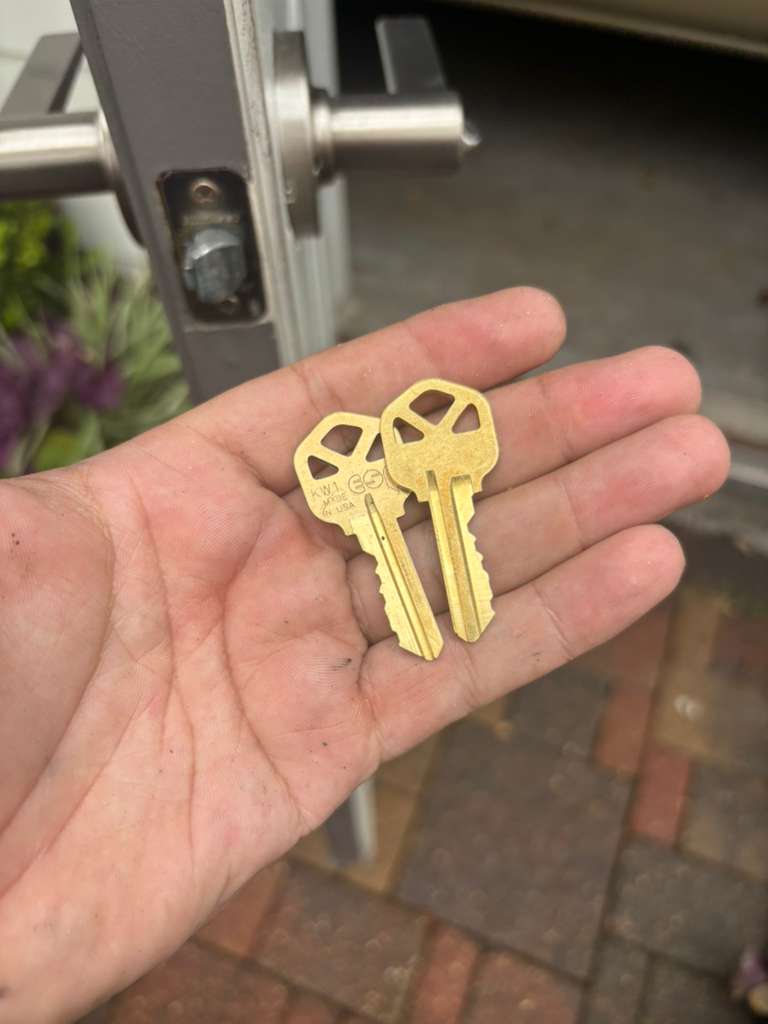
Keying alike means several locks work with one key. Many homeowners love this. It cuts down the key ring from janitor mode to normal-human mode.
This can affect rekeying cost because the locksmith must match each lock to the same key pattern. It is common with front and back doors, office doors, or rental units with shared access points.
Keying alike can save daily hassle. It can also add a little setup time, based on how many locks must match. For related help, see Residential lock rekeying or Commercial lock rekeying.
Rekeying vs master key work
A simple rekey gives one lock, or a group of locks, a new key.
Master key systems are different. They let one key open many locks while other keys open only certain doors. Great for offices, shops, and some multi-unit buildings. More setup. More planning. More testing.
That extra work can change the final cost. Businesses that need organized access may also look at Commercial access control systems.
Time and access
If the locks are easy to reach and the doors open and close well, the job is smoother.
If a locksmith must work around blocked doors, rusted screws, damaged trim, or tight building access, the visit can take more time. A commercial building with restricted entry can be slower than a small home in a quiet neighborhood.
Urgency and service timing
A planned daytime visit is often simpler than urgent service late at night or during a storm.
If you lost your keys after dinner and need service right away, timing may affect the total. Same goes for weekends or holiday calls. Fast help may involve an Emergency locksmith.
Travel and location
Service area and drive time can matter. In Houston, traffic near I-10 or US-59 can turn a short trip into a snail race. Travel can be part of the final amount, especially for longer-distance calls.
Rekeying and keying alike, why people ask for both
A lot of customers ask for a rekey after moving in. Then they realize they also want one key for the front and back doors. That is where keying alike comes in.
Picture this. You get home with groceries, your phone, a drink, and maybe a pizza box doing the balancing act of a circus pro. Now imagine testing three keys at the door. Nobody wants that.
Keying alike can make home access simpler. For small offices, it also cuts confusion for staff.
Still, not every lock can always be matched. Brand, keyway, and lock style matter. If locks are from different makers, the locksmith may need extra parts or may suggest a different fix. You can also ask ASAP Locksmith about Residential lock installation or Commercial lock installation if matching hardware becomes part of the plan.
Rekeying vs replacing locks
People often ask which is better. The answer depends on the lock and your goal.
| Need | Rekeying | Full lock change |
|---|---|---|
| Old keys stop working | Yes | Yes |
| Keep current hardware | Yes | No |
| Upgrade lock style or security grade | No | Yes |
| Fix badly damaged lock | Maybe not | Often yes |
| Make several locks use one key | Often yes | Sometimes |
If your locks work well and you just want new keys, rekeying is often the simple path. If the hardware is old, loose, or outdated, replacement may fit better. Related services include Residential lock replacement and Commercial lock replacement.
What we usually see in Houston, TX
In Houston, many homes have a deadbolt plus a handle set on the front door, and that means more than one cylinder to think about. In areas near The Heights or along Westheimer, we also see older doors with alignment issues that make lock work slower. For small offices and retail spaces, aluminum storefront doors are common, and those cylinders can be a different animal than home locks.
Houston weather also plays a part. Heat and humidity can make locks sticky over time. Rain can add grime around exterior keyways. Cold snaps are rare, but when they hit, stiff old locks love to act up at the worst time. For local weather patterns, see weather.gov.
How weather affects rekeying and lock care
Locks live outside on your doors, and Houston weather is no gentle babysitter.
Heat and humidity
Humidity can bring rust and corrosion. Heat can dry out old lubricant and leave pins sluggish. If a key drags or needs a wiggle, weather may be part of the story.
Rain
Rain can push dirt into the keyway, especially on exposed doors and gates. Water and dust together make a muddy paste inside the lock over time.
Cold
Houston does not get long winters, but short cold spells can make worn locks feel stiff. Metal parts contract a bit, and old grime becomes less forgiving.
A short safety note, if a key feels stuck, do not force it hard. Keys can snap, and then the small problem becomes a bigger one.
A few quick pairs that clear up common confusion
Myth, rekeying changes the whole lock.
Fact, it changes the pins inside the lock so a new key works.
Myth, every lock in a building can always use one key.
Fact, lock brand and keyway matter, so some sets match easily and some do not.
Myth, a sticky lock only needs more force.
Fact, force can bend or break the key. The lock may need cleaning, repair, or rekey work.
Myth, rekeying is only for break-ins.
Fact, people also rekey after moving, staff changes, roommate changes, or lost keys.
Simple steps when you are not sure what you need
- If you moved into a home or office, then rekey the locks so old keys no longer work.
- If your lock works fine but too many people had copies, then rekeying often solves it.
- If the key sticks, then check for dirt, weather wear, or door alignment before assuming the lock must be replaced.
- If you want fewer keys, then ask if your locks can be keyed alike.
- If the lock is loose, cracked, or badly worn, then replacement may fit better than rekeying.
- If you run a business with staff access, then ask about a master key system.
Why commercial jobs can be different
Business locks often come with extra rules.
A shop may need front, office, stockroom, and back door access sorted by role. A manager may need one key for all doors, while staff only open certain rooms. That setup takes planning and testing.
Commercial doors may also use mortise cylinders, lever sets, panic hardware, or restricted key systems. That can affect labor and parts. ASAP Locksmith also offers Panic bar installation, Exit device installation, and Commercial locksmith service.
For building owners, it helps to keep a current key record. If several people have left with old keys over the years, rekeying can bring order back fast.
Care schedule for longer lock life
A little care can help your locks work better and may keep a simple rekey from turning into a repair job.
Weekly
- Check if keys slide in smoothly.
- Wipe dirt from around exterior keyholes.
- Make sure the door closes without rubbing hard on the frame.
Monthly
- Test each entry door with the key from both sides.
- Look for loose screws on knobs, levers, and deadbolts.
- If a lock feels sticky, get it checked before the key bends.
Yearly
- Have exterior locks inspected, especially after heavy rain seasons.
- Review who has copies of keys.
- If you changed tenants, staff, or roommates, think about rekeying.
When rekeying makes the most sense
Rekeying is often a smart move in these moments:
- After buying a house
- After losing a key
- After a breakup or roommate change
- After a tenant moves out
- After staff turnover
- When you want one key for several doors
It is a clean reset. You keep the lock if it is still good, and you control who can get in.
FAQs
How long does rekeying take?
A small home job can be fairly quick if the locks are standard and in good shape. Commercial or worn locks may take longer.
Can all my house locks use one key?
Maybe. If the locks are the right type and keyway, many can be keyed alike. Mixed brands can make that harder.
Is rekeying safe after losing a key?
Yes, rekeying stops the old key from working. It is a common fix after keys go missing.
Do I need new locks after moving into a house?
Not always. If the current locks are in good shape, rekeying can give you fresh key control without changing the hardware.
Can smart locks be rekeyed?
Some can, if they have a standard key cylinder and the brand allows it. The smart part and the key part are not always the same thing.
What if my lock is rusty or sticky?
The locksmith may need to clean, adjust, or repair it first. If the wear is too far gone, a new lock may be the better path.
Does weather in Houston affect my locks?
Yes. Heat, humidity, and rain can make locks sticky, dirty, or rusty over time, especially on doors with full sun or poor cover.
Is rekeying only for homes?
No. Offices, shops, rental units, and warehouses use rekeying often to control access after staff or tenant changes.
If you need lock rekeying in Houston, ASAP Locksmith can help with homes, businesses, keying alike, and lock checks that make access simpler and safer. Call (832) 404-0102 or visit https://www.asap-locksmith-pros.com to get help from a local locksmith team that knows Houston doors, weather, and everyday lock problems. You can also Contact Us for service.