If your garage door lock will not turn, start simple. Try a spare key, add a bit of lock lube, warm the lock if it is cold, tighten loose screws, and check the strike plate. Most stuck locks come from worn keys, frozen latches, or misalignment. A few quick checks often bring the lock back to life.
Why your garage door lock stops turning
A garage lock is a small machine. It has pins, springs, and a latch or bolt. If one part gets dirty, bent, dry, or loose, the key may not turn. Houston weather also plays a part. Heat swells wood and metal. Humidity brings rust. A windy storm pushes grit into the keyway. Add a worn key, and you get a stubborn lock that acts like a mule.

Quick checks before you grab tools
- Try a known good key. Your spare sits in a drawer. It may still match the lock better than your daily key.
- Shine a light into the keyway. Look for bent pins, heavy dirt, or a broken tip.
- Wiggle the door. Lift or push the door a bit while turning the key. If it turns then, you have alignment trouble.
- Test inside thumb turn or handle. If the inside turns but the key does not, the key or cylinder is the problem.
- Spray a small burst of lock-safe dry lube. Avoid grease. Wipe off drips.
- Check screws on the strike plate and lock set. Tighten them snug, not Hulk tight.
Know your lock type
Garage doors use a few lock styles. The fix depends on the style you have.
- T-handle lock on a roll-up door. You see a handle with a key hole in the center. The key turns cams that release the bar. Good for older metal doors.
- Deadbolt or latch on a side service door. This looks like a normal house door lock. It has a latch or a deadbolt.
- Entry from house to garage. This is often a deadbolt with a knob or lever. It must close smooth to keep the home secure.
- Keyed handle on a tilt-up door. The handle pulls rods that lock the door to the tracks.
Spot the causes in plain talk
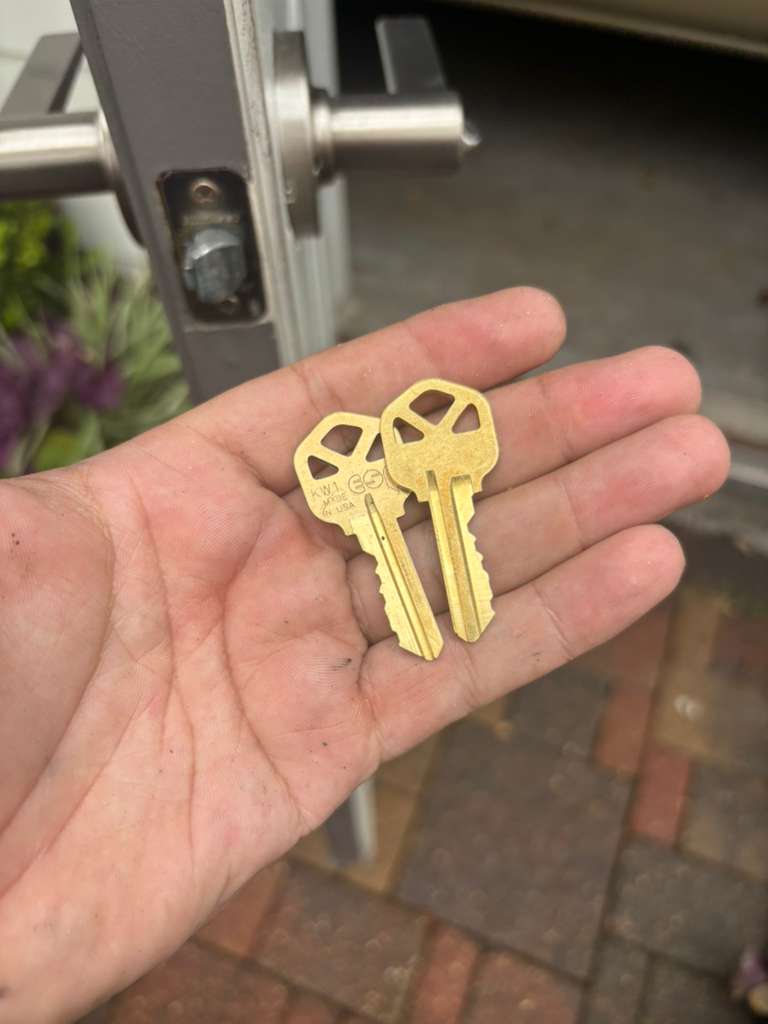
- Worn key. The tiny bumps called bitting wear down. The pins do not line up. The cylinder will not turn.
- Dirty cylinders. Dust, sawdust, or grit in the pin stack. Pins stick. Springs get weak.
- Frozen latch or bolt. Rust or thick grime locks it in place.
- Misaligned strike plate. The bolt hits metal instead of the hole. The door shifts with heat, cold, or loose hinges.
- Warped door or frame. Wood swells with Houston humidity and summer heat. Metal expands in the sun on days near the Katy Freeway.
- Loose set screws or cam. The inside parts slip. The key turns, but the latch does not move.
- Damaged tailpiece. This link between the cylinder and the latch can bend or snap.
- Weather seal rub. A new seal can push the door out of line if cut too tall.
Troubleshooting steps
- If the key will not insert fully, check for debris. Then tap the edge of the cylinder lightly and blow out dust. Try again with a spare key.
- If the key goes in but will not turn, add a short burst of dry Teflon lube, wiggle the key up and down, then try gentle turns both ways.
- If the key starts to turn then stops, pull the door toward you or push it in while turning. If it turns then, adjust the strike plate.
- If the inside knob turns but the key does not, rekey or replace the cylinder. The key is worn or the pins are stuck.
- If neither inside nor outside turns, the latch or bolt is seized. Remove the lock, clean and lube, or replace the latch.
- If the key turns 360 with no effect, tighten or replace the cam or tailpiece on the back of the cylinder.
- If the lock worked before a storm or freeze, warm the lock with a hair dryer, then lube and test again.
- If the lock binds at night but works by day, heat expansion is shifting alignment. Adjust hinges or strike plate.
Fixes you can try right now
Clean the keyway the right way
- Use a lock-safe cleaner or isopropyl alcohol on a cotton swab. Do not use cooking oil or heavy grease.
- Insert and remove the key 8 to 10 times to scrub the pins. Wipe the key often.
- Add a short puff of graphite or PTFE dry lube. Work the key again.
Refit a loose strike plate
- Close the door and watch where the bolt meets the plate. Rub lipstick or chalk on the bolt, then turn the knob to mark the spot.
- If the mark hits high or low, shift the plate. Loosen the screws. Nudge the plate a hair. Tighten. Test.
- If the holes are stripped, use longer screws that bite into the stud. A tiny move can fix a year of stick.
Help a stuck latch or bolt
- Remove the knob or handle. Two screws on the inside face hold it.
- Pull the latch out. Check for burrs or rust. Clean with fine steel wool.
- Coat the moving parts with a thin film of dry lube. Reinstall. Test before you close the door.
Deal with a T-handle on a roll-up door
- Remove the retainer clip or nuts from inside the door.
- Pull the handle and cylinder out. Check the cam and bars.
- If the cam wobbles, tighten the set screw. If the bars bind, clean the tracks and add a tiny drop of oil on the pivot points, not in the keyway.
Rescue a key with worn cuts
- Try your spare first. If it works, make a copy of the spare, not the worn one.
- If both are worn, a locksmith can decode the lock and cut a fresh key to code. This brings it back to factory spec.
Rehang a sagging side door
- Look at the gap around the door. If the top latch side rubs, tighten the top hinge screws.
- If holes are stripped, use a longer screw that reaches the stud behind the jamb.
- Add a thin strike plate shim if the bolt sits too far back.
Houston weather and your garage lock
Heat and humidity in Houston are not shy. Summer sun near Beltway 8 can swell a wood jamb. Metal parts expand too. This shifts the strike just enough to block the bolt. Heavy rain brings grit. Then the first cold snap makes parts shrink and lube thicken. Locks feel sticky.
What we usually see in Houston, TX
- Rust on T-handles on coastal side of town and near Galveston trips.
- Swollen side doors in The Heights after long rain weeks.
- Grit packed keyways in garages used as shops in Spring Branch.
Keep a small kit on hand
- Dry PTFE lock lube
- Short Phillips screwdriver
- Longer hinge screws
- Flashlight
- Hair dryer
- Spare key
Risk notes you should know
- Do not heat a lock with open flame. Garages have fuel, paint, and dust.
- Wear glasses when you spray cleaner. It bounces back.
- Unplug the opener if you work inside a roll-up door. Prevent a surprise cycle.
- If you must drill a lock, stop and call a pro. Drilling can harm the door or track.
When the key is the problem
Keys have a life. Each turn wears the edges. A lock pin needs a crisp ridge to line up. Here is how to spot a tired key.
- The peaks look rounded, like gentle hills not sharp cuts.
- The key sits loose in the lock and wiggles a lot.
- Your spare works better than your daily key.
What to do
- Make a copy of the best key you have. Do not copy the worn one.
- Ask for a code cut if you have the key code tag or the cylinder code. A locksmith can read and cut it right.
- Consider rekey if you lost track of old copies. New pins, fresh keys, same hardware.
When the latch or bolt is the problem
A latch that sticks has its own clues.
- The knob turns hard, even from inside.
- The door must be slammed to catch.
- The bolt has rust stains or rough edges.
What to do
- Pull the latch. Clean and lube the bolt and spring.
- Check the faceplate. If it is bent, replace the latch.
- File a tiny chamfer on the bolt edge if it snags, but do not overdo it.
- If the latch is pitted or cracked, replace it. They are not meant to bend back and back again.
When alignment is off
Doors move. A small sag stops the bolt. The fix is simple most of the time.
- Tighten hinge screws. Replace one short screw per hinge with a longer one into the stud.
- Adjust the strike. Move it a hair up or down until the bolt glides.
- Check the weather seal. If a new seal is pushing the door, trim it a bit.
A simple lube guide that works
- Use dry graphite or PTFE spray. These do not hold dirt like oil.
- One short spray is enough. Wipe off any extra.
- Work the key 10 times to spread the lube.
- Avoid WD-40 as a long-term fix. It can gum up over time.
Common mistakes that make locks worse
- Over-lubing. More is not better. It makes mud with dust.
- Using the wrong screwdriver. Stripped screws make future fixes harder.
- Forcing the key. That can snap the tip. Then you have two problems.
- Slamming the door. It may latch now, but it bends parts and shifts the frame.
Little story from a Houston garage
A dad in Meyerland called about a stuck side door. He had a baseball game to catch. He kept turning the key with both hands. No luck. We had him press the door in with his hip and try again. The key turned like it was new. The strike was off by a hair from a sagging top hinge. Three longer screws and a tiny shift, and he made the first pitch. Small move, big win.
Myths and facts about stuck garage locks
- Myth: WD-40 fixes any lock for good.
Fact: It helps short term, but it can attract dust. Use dry lube for long life. - Myth: If the inside turn works, the key must be fine.
Fact: The key and cylinder can still be worn. Pins read the key, not the thumb turn. - Myth: A bigger hammer solves sticky doors.
Fact: Force bends parts. Alignment and lube solve sticky doors. - Myth: New keys fix old locks.
Fact: If the lock is worn, new keys will not change pin wear or a bent cam.
Care schedule you can follow
Weekly
- Brush off dust from the lock and handle.
- Keep the door area clear so nothing hits the handle or bars.
Monthly
- Test the key and inside knob. Feel for drag.
- Wipe the strike plate and bolt face with a dry cloth.
- Tighten faceplate and strike screws a quarter turn.
Twice a year
- Lube the keyway with dry spray.
- Inspect hinges and replace one screw per hinge with a longer one if needed.
- Check weather seal fit during both hot and cold seasons.
Yearly
- Make a fresh copy of your best key and store it.
- Inspect T-handle bars and cams on roll-up doors for rust or play.
- If you see heavy wear, plan a cylinder or latch swap before it fails on a busy morning.
If you face a lock with a broken key
- Do not jam in another key. You will push the tip deeper.
- Use needle nose pliers to grip the edge. Pull straight out.
- A hook tool can help if you see the end. Work slow.
- If the tip sits past the front pin, a locksmith pick and extractor will save the day without harm.
If your overhead door will not open because of the lock
Some doors have a manual lock that blocks the opener. If bars are engaged, the motor strains and stops.
- Check if the T-handle is vertical or horizontal. Only one position releases the bars.
- Look at the inside bar ends. They should pull clear of the track slots.
- If the cable between the T-handle and bars snapped, you must remove the handle and reset the bars by hand from inside.
Simple test for misalignment without tools
- Color the bolt with a dry erase marker. Close the door slowly. Turn the knob.
- Open the door and look at the strike. The ink mark tells you where the bolt hit.
- Shift the plate to move the mark to center.
Small fixes that add up
- Add a thin dab of candle wax to the bolt face. It can ease slide in a pinch.
- Install a strike with an adjustable slot. That gives you more wiggle room in summer and winter.
- Swap old short screws with longer ones in both hinges and strike. Holds alignment longer on soft jambs.
When it is time to replace
- If the cylinder shows heavy green or white corrosion and cleaning does not free it, replace it.
- If the tailpiece or cam is cracked, replace the cylinder or handle set.
- If the latch sticks even after cleaning, replace the latch. Springs get tired.
Parts checklist by lock type
T-handle roll-up
- Cylinder with cam
- Retainer clip or nuts
- Linkage to bars
- Bars and track slots
Side service door
- Knob or lever set with latch
- Deadbolt cylinder and bolt
- Strike plate
- Hinges and screws
House to garage entry
- Deadbolt
- Strike box with deep pocket
- Self-closing hinges or closer if required by code
Choose better materials for Houston
- Stainless or brass components stand up better to humidity.
- Weather shields on T-handles help keep rain out.
- Full lip strike plates guide the latch better on wood frames.
Friendly reminders for DIY
- Keep all small parts in a tray. Springs like to run off.
- Take a phone photo before you pull parts. It helps on reassembly.
- Test the lock with the door open first. Then close and test again.
FAQs
Q: Why does my garage door lock work in the morning but not at night?
A: Heat expands the door and frame. At night, cooling shifts parts. A tiny move can block the bolt. Adjust the strike or tighten hinges.
Q: Should I use graphite or a spray lube?
A: Use a lock-safe dry PTFE spray or graphite. Graphite is great in dry spots. PTFE sprays well and is cleaner. Avoid heavy oils.
Q: Can I spray the whole lock with WD-40?
A: Use it only as a cleaner in a pinch. Wipe it off, then add dry lube. If you soak the lock, dust will stick later.
Q: My key turns all the way around. What broke?
A: The cam or tailpiece on the back of the cylinder is loose or broken. Remove the cylinder, tighten or replace the part.
Q: How do I fix a frozen lock in winter?
A: Warm it with a hair dryer. Do not use open flame. Add a small puff of dry lube. Work the key gently.
Q: Is drilling the lock safe?
A: Drilling should be a last resort. You can hit parts and harm the door. If it is stuck hard, call a locksmith.
Q: The inside turn works but the key will not. Do I need a new lock?
A: You may only need a new key or a rekey service. Pins may be worn or dirty. Rekey keeps the hardware and changes the pins and keys.
Q: How often should I lube a garage lock in Houston?
A: Twice a year works well, once before summer heat and once before the first cold snap.
Q: Do smart locks help on a garage side door?
A: Smart locks can be handy. Pick one with a strong deadbolt and weather rating. Still keep alignment and lube in check.
Q: What if my garage opener pulls but the door stays locked?
A: The manual lock bars may be engaged. Release the T-handle lock first, then try the opener. Check the cable or linkage if it stays stuck.
A quick word on Houston habits
Many garages in Houston pull double duty. They store tools, grills, and hobby gear. That means more dust and more door use. A lock that gets used a lot needs a bit more care. A two minute lube and a small screw turn save a Saturday later. Think of it like changing a truck’s oil. Little things keep big things running smooth.
How misaligned strikes start in the first place
- Settling. Homes settle a bit. The frame moves a hair.
- Hardware swaps. A new knob with a slightly different latch throw can miss the old strike.
- Weather seals. Thick new seals push the door out until the foam beds in.
Simple alignment trick without guessing
- Use painter’s tape on the strike. Close and turn the latch. The tape tears where it hits.
- Move the strike until the tear sits in the middle. Tighten and test three times.
When to call a pro right away
- The key is stuck and will not come out. Forcing it can bend pins.
- The lock spins free and the door is your main entry.
- The door is jammed shut with power tools or cars inside. A quick, clean open is worth it.
- You see drill marks or past damage. A tidy repair keeps it secure and neat.
You are not alone in this
We hear the same stuck lock story near I-10 and in The Heights. Heat, dust, and busy days wear locks down. Take it step by step. Test the key, clean the cylinder, check alignment, and tune the strike. Most fixes take less time than brewing coffee.
Last checks before you wrap up
- Close the door. Turn the key 10 times. It should feel smooth.
- Test from inside and outside.
- Lock and unlock with a light touch. No grunt needed.
- Mark the date on a note. Plan your next lube in six months.
Need help right now in Houston? ASAP Locksmith can free a stuck garage lock, rekey worn cylinders, realign strikes, and set your door to lock smooth in heat, rain, or cold. We handle T-handles, deadbolts, and side doors fast and clean, so you can get on with your day. Call 832-404-0102 or visit https://www.asap-locksmith-pros.com.