If your key broke in the ignition, stop and breathe. Turn the steering wheel a little to loosen the lock. Power off the car. Stop pulling on the broken key. Those three moves keep things from getting worse. After that, check what you can see, keep any broken piece you have, and use gentle steps. If it fights you, call a locksmith before real damage happens.
Why a key breaks in an ignition
A key is small, but it works hard. It twists metal tumblers while holding back a steering lock. Over time, wear builds up. Here is what often causes a sudden snap.
- Old key with tiny cracks from years of turns
- Cheap copy cut a bit off from the original
- Heavy keychain that pulls the key at an angle
- Dirt or grit inside the ignition cylinder
- Steering wheel locked hard against a curb
- Cold snaps that make metal less flexible
- Heat that dries lube and adds friction
Picture this. You finish lunch near The Galleria, hop in, turn the key, and it sticks. You try again. Snap. You think, did that really just happen. It happens more than you think.

First steps that stop damage
Think of this as a pit stop. Quick, calm steps now save hours later.
- Set the parking brake. Keep the car still and safe.
- Put the shifter in Park or Neutral. No rolling.
- Turn off the ignition. Pull the key to OFF if it still moves.
- Hold the wheel with both hands. Turn it left and right a little. Do not force it. You are trying to ease the steering lock.
- Stop yanking the key. Tug-of-war bends parts inside.
- Keep any broken tip or head. Bag it so you do not lose it.
- Look closely. Is any part of the broken key sticking out. Even a tiny lip helps.
Simple ways to tease the piece out
If you see a bit of metal showing, you might get lucky. Move slow. Use a light touch. The goal is zero extra damage.
- Try needle nose pliers, tweezers, or a hemostat if you have one. Grip the piece square. Pull straight and steady. No twisting.
- Slide two thin plastic strips around the key piece. Think gift card edges. They protect the face of the cylinder while you pull.
- Use a thin dry lube. Graphite powder works well. A tiny puff in the key slot lowers friction. Skip heavy oils. In Houston humidity they pull dust and turn gummy.
- Wiggle the steering wheel as you pull. A tiny wheel turn can drop pressure on the key piece.
- Shine a light in the slot. You want to see if the key fragment sits high or low.
Smart use of household items
No tool box. No problem. Some simple items can help in a pinch.
- Bobby pin trick. Bend one pin flat. Make a tiny hook at the tip. Slide it along the key grooves and pull back gently.
- Paper clip helper. Unfold it. Shape a small L at the end. Use it to catch the edge of the key piece.
- Hacksaw blade slice. If you have a very thin broken blade with teeth pointing out, slide it above the key piece. The teeth can grab the grooves. Pull out slow and even. Watch the face of the cylinder. Do not scratch it to bits.
- Sticky tape tab. Press strong tape on the key stubble. It sometimes grips enough to nudge it out. Not fancy, but it can work.
- Thin feeler gauge. If you keep one for spark plugs, it can slide beside the key and act like a mini ramp for the piece.
When the fragment sits flush or deep
If the broken part is flush with the face or buried, do not stuff random things inside. You can push the piece deeper and jam the tumblers.
- Try a real key extractor if you have one. It looks like a thin blade with hooks. Slide it along the grooves, hook the piece, then pull out in a straight line.
- Use light. A small mirror and phone light help you see depth and angle.
- If nothing catches or it slips deeper, stop. This is the point where small mistakes become big repairs.
What not to try
These are common moves that sound smart but cause trouble.
- No super glue. It runs into the tumblers and locks the whole cylinder. Then nothing turns.
- No drilling. That is a last resort for pros with the right jig.
- No hammering. Vibration can break more parts.
- No prying the wheel hard. The steering lock pin can chip or bend.
- No spray of heavy oil. It collects dust, then turns to paste.
Quick fix list for common spots
Use this cheat sheet to guide your next move.
- If the wheel is locked tight against a curb, then rock it left and right while you pull the key piece straight, slowly.
- If the key head broke off but the blade turns, then turn back to OFF first before you try to remove it.
- If the fragment sticks out even a hair, then use tweezers or pliers with padding and pull in line with the key.
- If the fragment sits flush, then try a thin extractor or bobby pin along the groove, not the top face.
- If the key broke right after you parked, then make sure the shifter is in Park or Neutral, and the parking brake is set, to lower bind on the cylinder.
- If the ignition feels gritty, then add a tiny bit of dry graphite and try again with light pressure.
- If the piece will not budge after two or three tries, then stop and call a locksmith to avoid inside damage.
Myths and facts that matter
- Myth – A few drops of super glue will stick the key back togetherFact – Glue spreads and locks the cylinder. It turns a quick fix into a tow.
- Myth – WD type oil fixes any stuck keyFact – Oil can help short term, but in humid Houston it grabs dirt. Dry lube is safer for ignitions.
- Myth – Any pliers will do, just pull harderFact – Hard pulling bends wafers inside. Then the new key will not work right.
- Myth – If it starts once, it is fineFact – A small break means wear inside. Fix it now and you avoid a no start later.
Care schedule that prevents repeat pain
Use this simple plan. It keeps your ignition smooth and your key strong.
Weekly
- Lighten your pocket. Keep only the keys you need on the ring you drive with.
- Listen to the start. If the key feels rough or sticky, note it.
Monthly
- Clean the key. Wipe metal shavings and lint off with a soft cloth.
- Add a puff of dry graphite to the ignition slot. Work the key in and out a few times to spread it.
- Check your spare. Make sure it turns smooth too. A bad spare leads you back to the same spot.
Yearly
- Get a fresh copy cut from the original code if your key looks worn. A crisp cut puts less strain on the cylinder.
- Have a locksmith check the ignition if you feel grinding or hang ups. A quick fix now beats a full swap later.
- Inspect key fobs and transponder heads. Cracks in the plastic can turn into another broken head.
Houston notes you can use
Houston heat, rain, and traffic add their own twist. Sitting on I-45 in August with the AC cranked, your ignition gets hot and dry. Add a heavy keychain and it is a perfect storm. Parking decks near The Galleria can also leave your steering wheel cranked hard against a curb. That locks the steering pin, which locks the key.
Here is what we usually see in Houston, TX
- Keys that snap right after a tight curb park
- Cylinders gummed up from humid air and dust
- Worn keys from years of quick gas stop turns
Weather and your ignition
Heat
Metal expands. Tight parts get tighter. Old lube thins out or dries. Keep keys light and lube the cylinder with dry graphite now and then.
Cold snaps
Yes, Houston gets them. Cold makes metal less forgiving. Brittle plastic heads can crack. Turn the key slow. No quick jerks.
Rain and humidity
Moist air brings corrosion to tiny parts. It also makes oil based spray turn sticky. Keep it dry inside with dry lube, not grease.
When a locksmith makes sense
Sometimes the best tool is a trained set of hands. A mobile locksmith can get the broken piece out without tearing into the dash. They use thin extractors, key code tools, and safe lube. They also check the ignition wafers and the steering lock. If the cylinder is worn, they can repair or swap it. If your key has a chip inside, they can cut and program a new one. That gets you back on the road without a tow truck and without more damage.
What a pro does on site
- Confirms the car is in Park or Neutral and safe
- Eases steering lock pressure without stress on parts
- Uses a matching extractor on the key groove pattern
- Cleans the cylinder, then tests with a blank key
- Cuts a fresh key by code if the old one is worn
- Programs a transponder if your car uses one
- Tests start and shut down several times so you know it works
A short story from the lot
You turn the key and mutter, Come on, start. It snaps. Your buddy says, Just glue it. You raise an eyebrow. You pull out a bobby pin instead, hook the tip, and it slides out like a fish on a line. You both blink. Then you call a locksmith to check the cylinder before the next snap. Ten minutes later, it turns smooth. That is the win.
Simple tool list for your glove box
- Needle nose pliers with smooth jaws
- Two plastic gift card strips
- Graphite powder straw
- Small LED pen light
- A spare key kept in a safe spot
- The number of a trusted locksmith saved on your phone
Quick checks before and after removal
Before
- Is the wheel locked hard. Ease it a bit.
- Is any part of the key visible. Try a gentle grab.
- Is the shifter set correctly. Park or Neutral helps.
- Does the key move even a tiny bit. If yes, move it to OFF.
After
- Keep both key pieces. Do not toss the broken tip.
- Try your spare. If it feels rough, stop and get it checked.
- Lightly lube the cylinder with dry graphite and cycle the key a few times.
- Reduce weight on your key ring. Your ignition will thank you.
Stuck ignition key versus broken key
Sometimes the key is not broken. It is just stuck. Here is how you can tell and what to try.
- Stuck key often turns but will not come out. The shifter may not sit fully in Park. Wiggle the shifter and tap the brake. Check the battery too. Some cars need power to unlock the key.
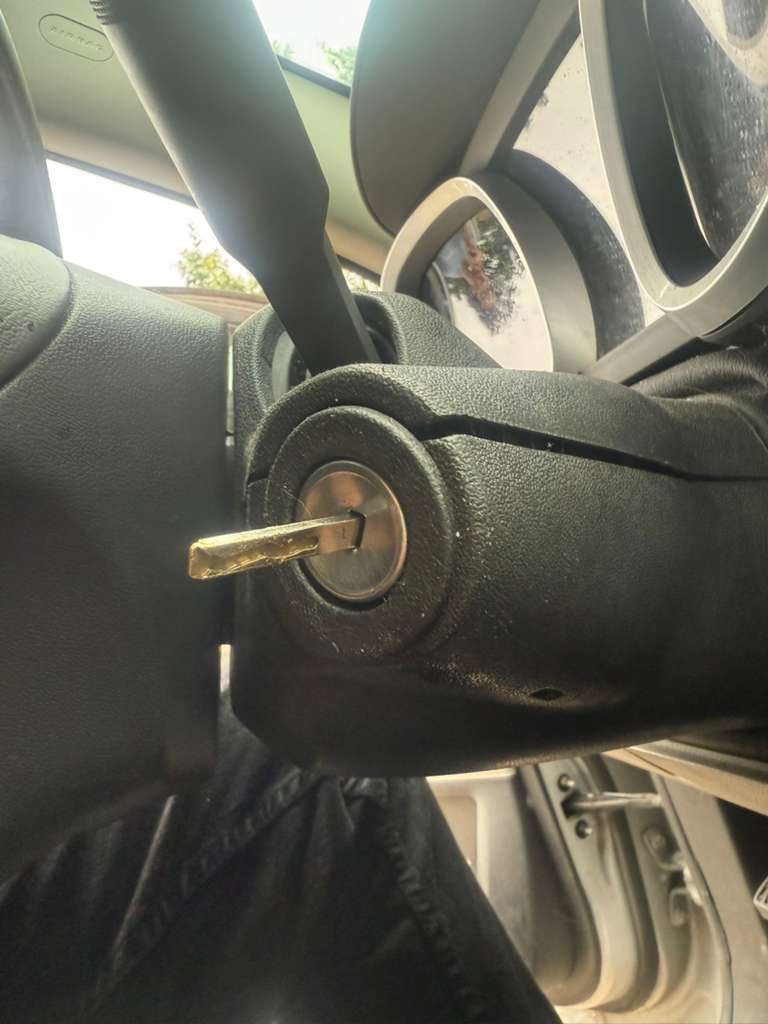
- Broken key leaves part of the blade in the slot. The head comes off in your hand. Your move is gentle removal, not more turning.
Risk notes in plain words
- Keep your hands steady. Jerky moves cause chips and burrs.
- Do not block traffic. If you are on the side of the road, turn on hazards.
- If you smell smoke or see sparks, stop and step away. That is rare, but safety first.
Ignition wear signs you should not ignore
- Key must be wiggled to start
- Key sticks when you try to pull it out
- Grinding feel or scratchy sound when turning
- Plastic key head cracks or feels loose
- Steering wheel lock feels harsh or uneven
If you notice any of these, get a check before a break happens. It is like spotting a wobble in a tire. Fix it before it blows.
How copies and cuts matter
Keys are like shoes. Bad fits cause pain. A worn key makes a worn cylinder. A crisp key protects it. If your key looks rounded or shark fin shaped, it is past its prime. Get a fresh one cut by code, not copied from the worn one. That small step can add years to your ignition.
Heavy keychains and real damage
We have all carried a pile of keys like a janitor on a mission. The extra weight turns every bump into strain on the ignition. On Houston roads with heat and potholes, that weight works the key like a lever. Lighten the load. Use quick release rings. Keep house keys on a second ring in your pocket.
Transponder keys and smart tips
Many cars from the last 20 years use a chip key. The chip talks to the car. If your key head breaks, even if you pull the blade out, the chip might be in the head. Do not toss it. A locksmith can often move the chip to a new shell and cut a new blade. That saves time. If your key is push to start, these tips still help for door locks and trunks.
FAQs
- Q: Who should I call first if my key broke in the ignitionA: Call a mobile locksmith. They handle broken key removal every day. If you are in Houston, a local pro can reach you fast.
- Q: What will it cost me in damage if I keep pullingA: Hard pulls can bend wafers and the housing. That can lead to a full cylinder swap. Gentle moves protect parts and save time.
- Q: How long does broken key removal takeA: Many jobs take minutes when done with the right tools. Time grows if the piece is deep or if the cylinder is worn.
- Q: Is it safe to use graphite in my ignitionA: Yes, dry graphite works well for locks. Use a tiny puff. Avoid heavy oils in humid areas, since they can gum up over time.
- Q: Can I start the car with the broken half still insideA: If the inner piece still turns, it might start, but that is risky. Turn to OFF, remove the piece, then fix the root cause.
- Q: Where do keys usually breakA: Near the bow where the metal meets the plastic head, or at a thin cut near the tip. Wear and side force make those spots weak.
- Q: How do Houston weather and roads affect thisA: Heat dries lube and expands parts. Humidity adds grit and corrosion. Tight curb parking adds steering lock pressure. All that strains the key.
- Q: When should I replace my ignition cylinderA: If you feel grinding, the key sticks, or new keys still act rough, it is time to inspect and likely replace or repair the cylinder.
Stuck with a broken key in Houston, TX. ASAP Locksmith can come to you, remove the piece cleanly, repair the ignition, and cut or program a new key so you can roll again with less stress. Call 832-404-0102 or visit https://www.asap-locksmith-pros.com for fast, friendly help that protects your car and your day.